Utah Real Estate Competition · 2026
Foothill Landing
A 112,000 SF community and wellness center proposed for the University of Utah's upper campus.
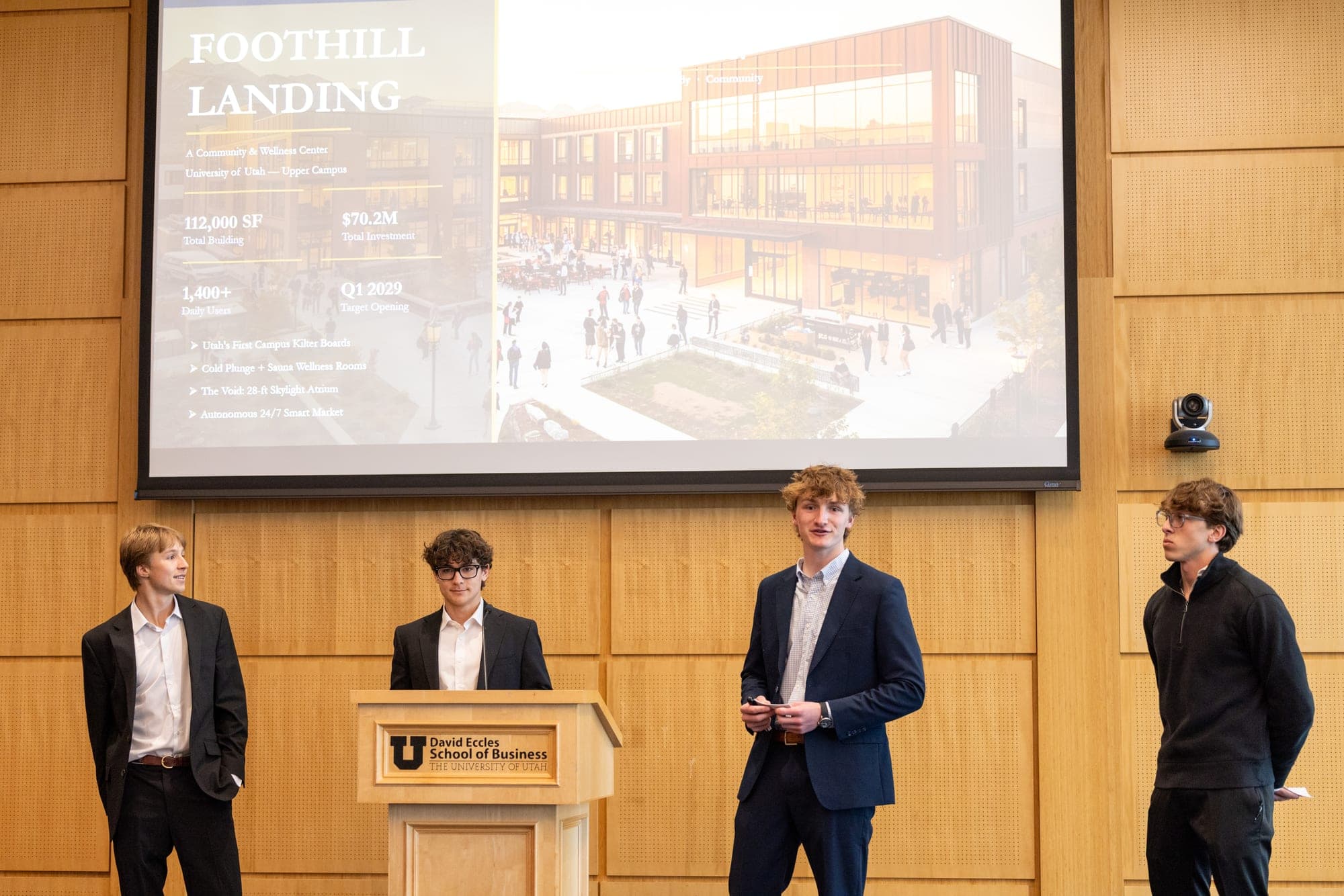
The Brief
The Utah Real Estate Competition asks student teams to develop a real, site-specific proposal for a piece of land — financial structure, market research, and design — and defend it in front of a panel of industry professionals. Our team was assigned a parcel on the upper campus of the University of Utah and given a brief to design something that served students.
Approach
We landed on a community and wellness center — a use case underserved on the upper campus and one we believed students would actually pay for. To test the thesis before committing the financials, we ran a market research survey of 65 students. The results were stronger than expected: 89% confirmed demand for the space, and 91% indicated they would use the facility.
From there I helped build a full development pro forma — capital structure, operating budget, and revenue projections drawn from a mix of retail and wellness tenants. The financial model had to hold up against questions about absorption, tenant mix, debt service, and the university subsidy that ultimately made the project viable.
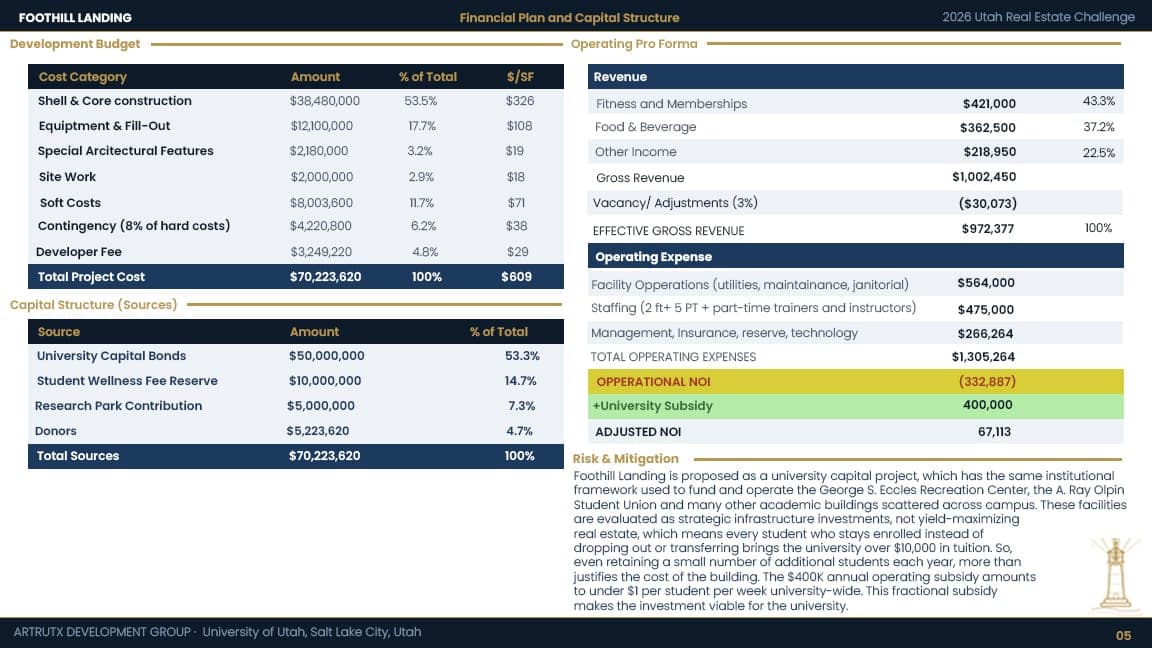
By the Numbers
$70.2M
Project Value
112,000
Square Feet
89%
Confirmed Demand
91%
Would Use Facility
65
Survey Respondents
18
Industry Judges
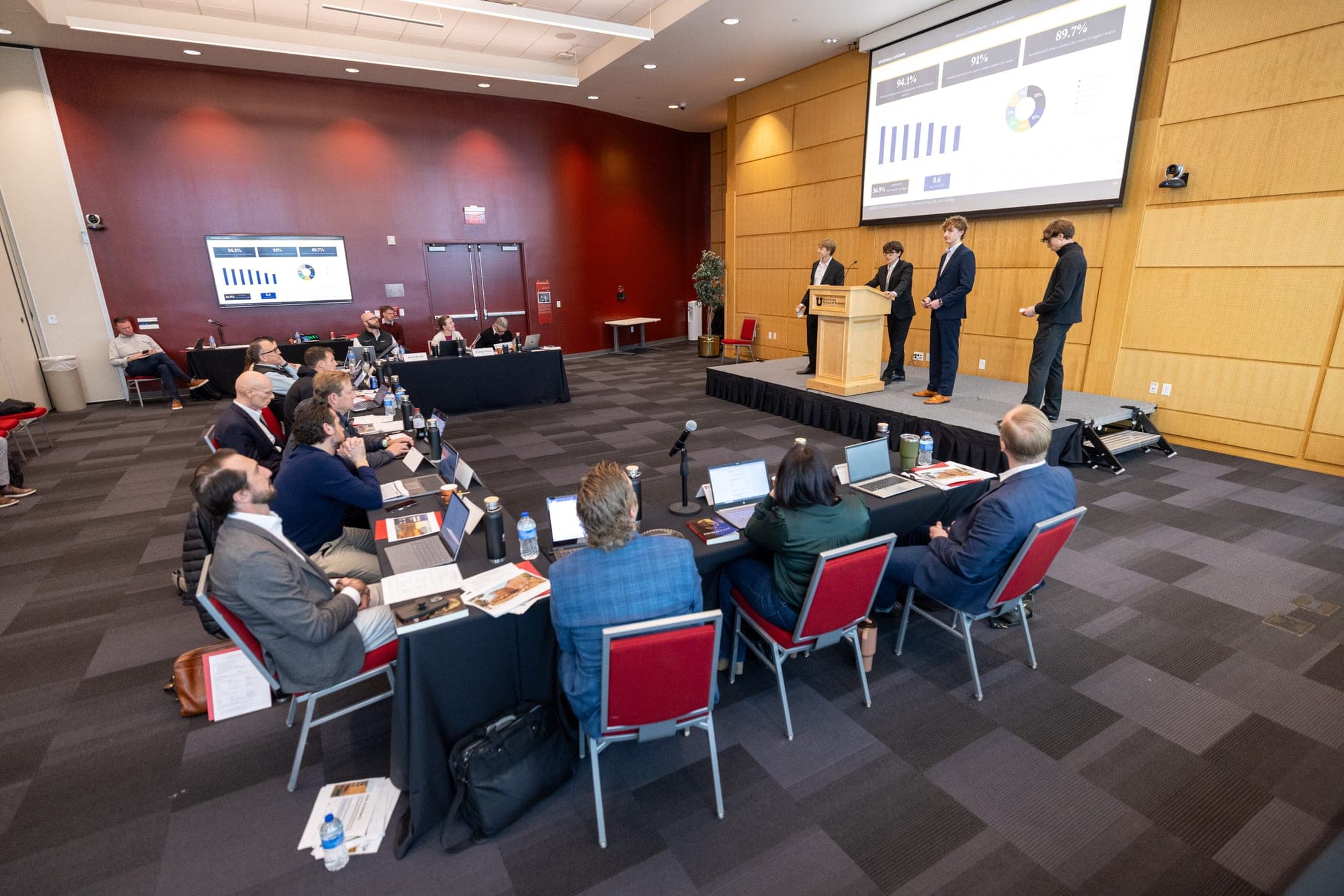
Outcome
We presented Foothill Landing to a panel of 18 real estate industry professionals at the David Eccles School of Business. The most useful feedback came from the questions: where the model bent under pressure was where I learned the most about how operators actually evaluate a deal.
What I took from it
A pro forma is a story about belief. The numbers are only as good as the assumptions underneath, and the assumptions are only as good as the research you did to ground them. Watching seasoned operators stress-test a model in real time was the most valuable part of the competition — more valuable, in some ways, than the result.